

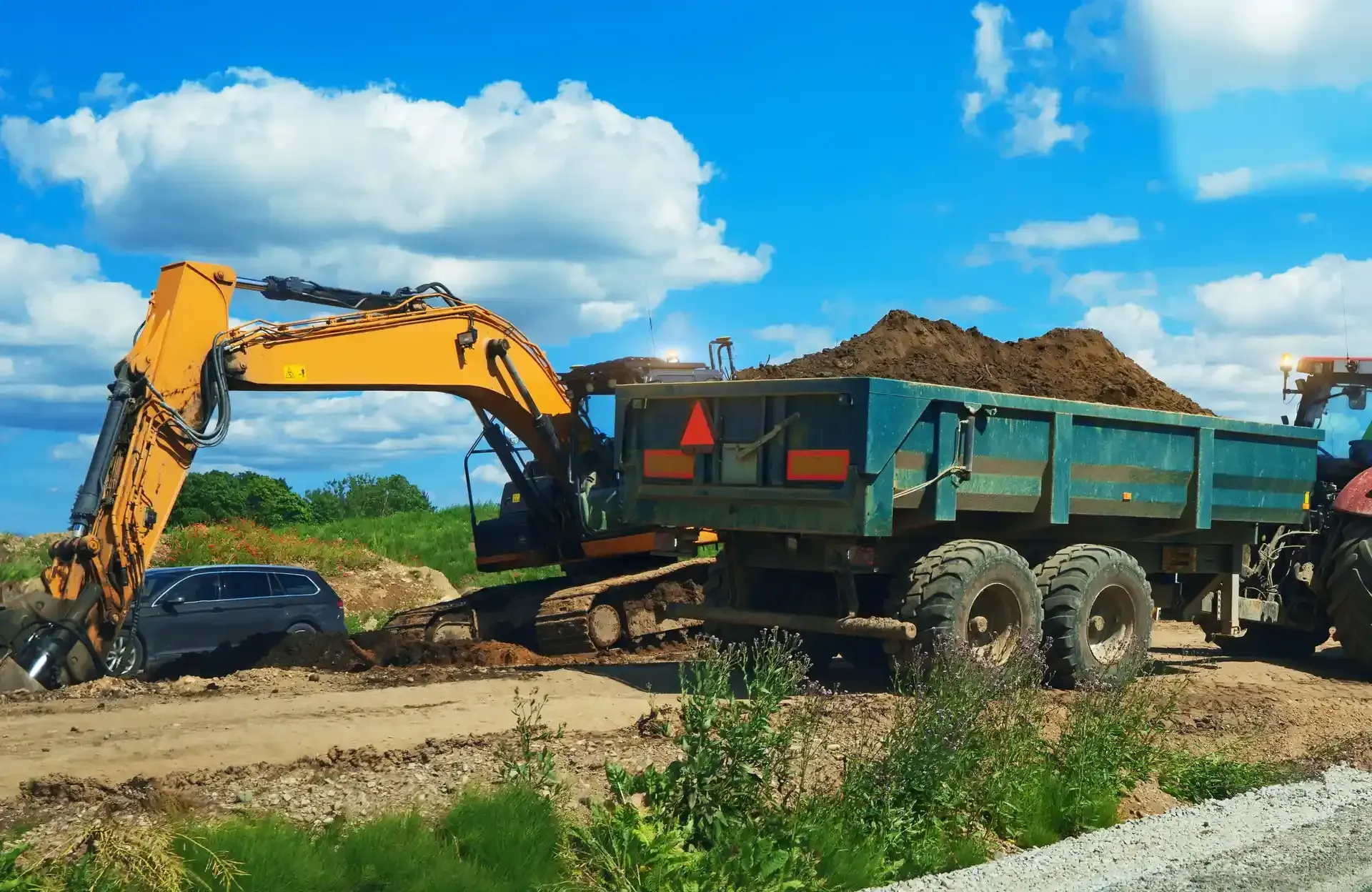


Material hauling is one of the pieces that can make or slow down a dirt work project. A site may need gravel delivered, fill dirt brought in, spoils hauled away, brush removed, concrete debris cleaned up, or rock spread before the next phase can happen. Hauling is not just a final cleanup step. It can affect access, timing, grading, drainage, pad prep, driveway work, demolition, clearing, and whether the site is ready for the next contractor or use. This guide explains when hauling should be planned into a dirt work project and why it matters. Dirt Work Usually Creates or Requires Material Movement Most dirt work projects involve moving material in, out, or around the site. If that movement is not planned, work can stop while the site waits for rock, fill, gravel, cleanup, or debris removal. Hauling may be needed when a project involves: Land clearing Excavation and trenching Grading and leveling Driveway or road work Building pad prep Drainage correction Concrete or asphalt tear-out Demolition and structure removal Parking area or commercial site prep Final cleanup after equipment work Planning hauling early helps keep the project moving in the right order. When Material Needs to Be Brought In Some projects cannot move forward without the right material on site. Delivery timing matters because grading, spreading, base prep, and compaction often depend on having the correct material available. Material may need to be brought in for: Gravel driveways or access roads Base rock for pads, parking areas, or surfaces Fill dirt for low areas or site balancing Sand, rock, or topsoil depending on project needs Riprap or rock for erosion control and outlet protection Material for construction entrances or temporary access Parking area, driveway, or concrete/asphalt prep Material should be delivered where equipment can access it and where it will not block the next phase of work. When Material Needs to Be Hauled Off Other projects create material that needs to leave the site. If unwanted material is left in the way, it can block access, delay grading, prevent pad prep, or leave the property unfinished. Material may need to be hauled off after: Brush clearing or tree removal Demolition or structure removal Concrete or asphalt tear-out Excavation or trenching Drainage work Grading and cut/fill work Cleanup of old debris, rock, dirt, or mixed material Spoils, brush, concrete, asphalt, debris, and unusable material should be handled as part of the project scope when possible. Trucks Need Access Before Hauling Can Work Hauling depends on access. Even if material is ready to move, trucks need a safe and practical route to enter, unload, turn around, and leave. Before hauling, consider: Is the driveway or entrance wide enough? Can trucks reach the work area? Is the ground firm enough after rain? Are there gates, fences, trees, or tight turns in the way? Is a culvert or construction entrance needed first? Where should material be staged or dumped? Will hauling traffic damage an existing driveway or soft access route? Access should be reviewed before delivery or removal is scheduled. Delivery Is Not Always the Final Step Material delivery does not automatically mean the material is ready to use. Gravel, rock, fill, and base material often need to be spread, shaped, compacted, or placed with equipment. Material placement may be needed for: Driveway resurfacing Access road base Building pad fill or base material Parking area prep Drainage rock or riprap placement Low area fill Construction entrance stabilization Final site cleanup and smoothing Planning spreading and placement helps avoid piles of material sitting in the wrong spot or blocking the project. Hauling Should Match the Dirt Work Sequence Hauling can happen at several points in the project, not just at the end. Examples : Brush hauling may happen after land clearing before grading begins. Spoils removal may happen during excavation or trenching. Gravel delivery may happen after drainage and grading are corrected. Base material may be delivered before pad compaction or concrete prep. Concrete debris may need hauling before new surface prep begins. Final cleanup may happen after the site is shaped and ready for use. The best time to haul depends on what the project needs next. Common Hauling Mistakes That Slow Down Projects Hauling problems often happen when material movement is treated as a detail instead of a planned part of the job. Common mistakes include: Ordering material before the site is ready to receive it Dumping gravel where equipment cannot spread it efficiently Delivering rock before drainage or grading is corrected Forgetting to haul brush, spoils, or debris away Not checking truck access before scheduling delivery Leaving concrete or asphalt debris in the work area Treating final cleanup as an afterthought Underestimating how much material needs to be moved Good hauling planning keeps the site cleaner and easier to work on.

Removing old concrete or asphalt is often only the first step. Once a slab, driveway, parking area, foundation, or paved surface is torn out, the site may still need debris hauling, grading, drainage correction, base prep, compaction, and cleanup before the next phase begins. Whether the goal is a new driveway, parking area, slab, building pad, gravel surface, or clean usable land, what happens after tear-out matters. This guide explains what property owners should expect after concrete or asphalt removal. Removal Reveals What Is Under the Surface Concrete and asphalt can hide the condition of the ground below. Once the surface is removed, the site may reveal weak base, soft ground, old fill, poor drainage, low spots, tree roots, broken material, or uneven subgrade. After tear-out, the site may need follow-up work such as: Debris hauling Base material removal or replacement Rough grading or leveling Drainage correction Soft spot repair Backfill or fill material Compaction Surface prep for concrete, asphalt, gravel, or parking use The old surface may be gone, but the site still needs to be prepared for what comes next. Broken Material Has to Be Hauled or Managed Concrete and asphalt tear-out creates heavy debris. That material needs to be moved, hauled, staged, or cleaned up so the site can be worked properly. Debris planning should consider: How much concrete or asphalt is being removed Whether there is rebar, base material, dirt, or mixed debris How trucks can access the removal area Where material can be staged during the job Whether additional debris or old material is found underneath What condition the site should be left in after removal Hauling and cleanup are a major part of making the site ready for grading, base prep, or future surface work. The Site May Need Grading After Removal Once the old surface is out, the exposed area may not be level, shaped, or ready for new material. Concrete and asphalt removal can leave rough edges, uneven base, low spots, and areas that need shaping. Grading after tear-out may help: Smooth the exposed area Correct low spots or high spots Shape the site for drainage Prepare the area for base material Match the new surface to surrounding grades Improve access and workability after removal Grading should be based on the next use of the area, not just the shape of the old surface. Drainage Should Be Reviewed Before Replacing the Surface If the old concrete or asphalt failed, drainage may have been part of the problem. Water that sits on the surface, runs across the driveway, or collects along edges can weaken the base and create repeated maintenance issues. Before installing a new surface, check: Did water collect on the old surface? Did the area hold water along edges or low spots? Did runoff cross the driveway or parking area? Are culverts, ditches, swales, or drains needed? Does the surrounding grade send water toward the surface? Will the new surface have a clear path for water to leave? Replacing a surface without correcting drainage can cause the same problems to return. Base Prep Comes Before the Next Surface The base under concrete, asphalt, gravel, or parking areas affects how the finished surface performs. After tear-out, the base may need to be removed, replaced, reshaped, stabilized, or compacted. Base prep may include: Removing weak or contaminated material Adding base rock, fill, or gravel Correcting soft spots Shaping the subgrade Compacting the base Preparing for concrete forms, asphalt, gravel, or surface installation Coordinating drainage with the base work A new surface should not be installed over an unstable or poorly drained base. What Happens Next Depends on the Future Use After concrete or asphalt is removed, the next step depends on what the property owner wants the area to become. If the goal is new concrete , the site may need grading, subgrade prep, base work, drainage correction, and compaction. If the goal is new asphalt , the area may need parking or driveway grading, base preparation, drainage planning, and compaction. If the goal is gravel access or parking , the site may need road base, rock spreading, drainage correction, and grading. If the goal is a building pad , the area may need excavation, fill, pad grading, base material, and compaction. If the goal is cleanup only , the site may still need debris hauling, rough grading, and final cleanup. Removal clears the way. Site prep determines whether the next phase starts correctly. Common Mistakes After Concrete or Asphalt Removal Tear-out projects can create problems when the next step is rushed. Common mistakes include: Removing the surface without planning debris hauling Installing new material over weak base Ignoring drainage problems that damaged the old surface Skipping grading after removal Leaving broken material or debris in the work area Not matching the new grade to nearby driveways, pads, or surfaces Pouring concrete or paving before the site is ready A clean removal should be followed by the right preparation for the next use.

Demolition is often the first step toward making a property usable again. An old shed, barn, garage, mobile home, slab, driveway, parking area, or pile of debris may need to be removed before grading, access, drainage, pad prep, or new construction can begin. But demolition is not just knocking something down. The project also needs access, material handling, debris hauling, cleanup, and a plan for what the site should be ready for afterward. This guide explains what property owners can expect during demolition and site cleanup. A Good Demolition Project Starts With the Site Before removal begins, the site should be reviewed so the work area, access, debris, and next steps are clear. Helpful details include: What needs to be removed Property location and access points Approximate size of the structure, slab, or material Photos of the work area Whether concrete, asphalt, wood, metal, brush, or mixed debris is involved Any nearby fences, buildings, utilities, trees, or obstacles What the site needs to be ready for after cleanup The more clearly the scope is defined, the easier it is to plan equipment, hauling, cleanup, and any follow-up dirt work. Equipment and Trucks Need Room to Work Demolition and cleanup usually require equipment, trucks, trailers, or hauling access. If the site is hard to reach, overgrown, muddy, narrow, or blocked, access may need to be improved before removal begins. Access planning may include: Clearing a route to the work area Making sure trucks can enter and exit safely Reviewing gates, fences, overhead limbs, or tight turns Considering whether the ground will support equipment Planning where debris will be staged or loaded Keeping access open for hauling and cleanup A good demolition plan accounts for how material comes down and how it leaves the property. Common Demolition and Removal Projects Demolition and removal work can involve several types of material. Each one affects the equipment, hauling, cleanup, and next steps. Common removal projects include: Sheds, barns, garages, outbuildings, and small structures Mobile homes or older property structures Concrete slabs, foundations, pads, and driveways Asphalt driveways or parking areas Old retaining walls or site features Broken material, debris piles, brush, or scrap Failed surfaces that need to be removed before new prep begins Some projects are simple removal jobs. Others are part of a larger plan to rebuild, grade, drain, or prepare the site for future use. Debris Hauling Is a Major Part of the Job Demolition creates material that needs to be managed. If debris is not planned, it can block access, delay grading, or leave the property unfinished. Debris planning should consider: How much material needs to be removed Whether debris is wood, concrete, asphalt, metal, brush, dirt, or mixed material Whether material can be staged on site temporarily How trucks or trailers will access the debris Whether cleanup or rough grading is needed after hauling Whether old material will reveal additional dirt work needs A demolition job is not truly finished until the unwanted material is handled and the site is ready for the next step. The Site May Need Dirt Work After Demolition Once the structure, slab, surface, or debris is removed, the property may need follow-up work. Removal often reveals uneven ground, old base material, soft soil, low spots, drainage issues, or areas that need fill. After demolition, the site may need: Rough grading or leveling Backfill or compaction Dirt, gravel, rock, or fill material Drainage correction Concrete/asphalt prep Building pad prep Driveway or access repair Final cleanup before construction or use The next step should be based on what the site needs to become after the old material is gone. Common Mistakes During Demolition Cleanup Demolition can become more complicated when cleanup and next steps are not planned ahead. Common mistakes include: Removing a structure without planning debris hauling Forgetting equipment and truck access Ignoring old concrete, asphalt, or foundation material below the surface Leaving the site too rough for the next phase Skipping grading after removal Not addressing drainage problems revealed by demolition Waiting until after cleanup to think about pad prep, driveway repair, or hauling needs Demolition should clear the way for the next use of the property, not leave another problem behind.